
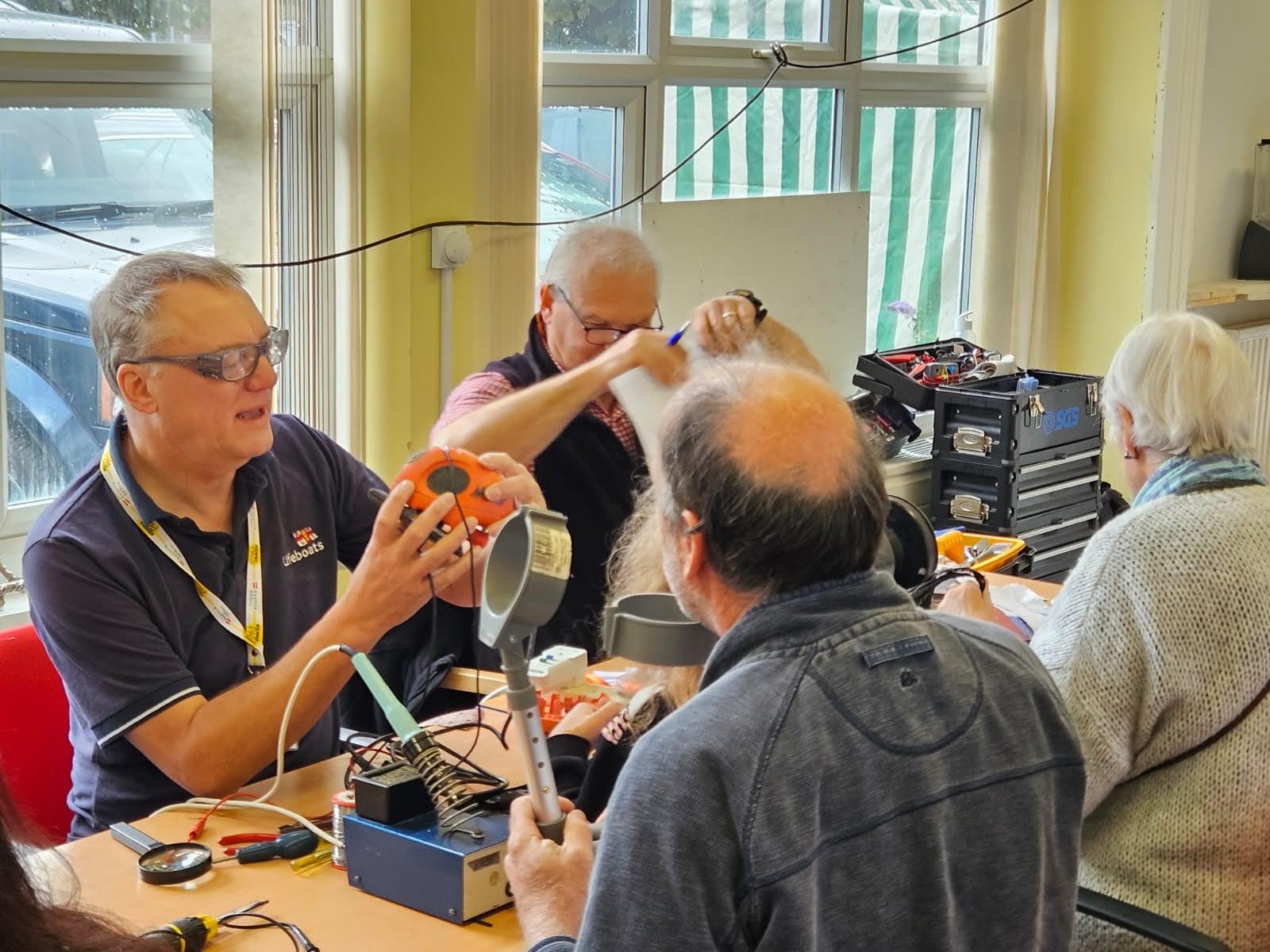
From a Squeezed Room to a Community Movement: The Founding of Repair Café Rugby, TALAM CIC, and the Rise of the Eco Hub
Every community movement starts with a single step—or in our case, an unexpected redundancy and a Facebook post.
Back in 2019, after being made redundant, I decided to take time off work to focus on things I had wanted to do for a long time. Having young children made me think deeply about the future and the world they would inherit. I’ve always hated waste, so I set up a local Facebook group called Journey to Zero Waste. One day, someone shared a link on the group to the Leamington Repair Café. I had never heard of a Repair Café before, but after visiting the Leamington group, I thought: why can't we have one right here in Rugby?
The First Meeting: Squeezing 30 People into a Small Room
I put out a message on social media inviting anyone interested in starting a local Repair Café to a meeting at the Claremont Centre. I honestly thought if five or six people showed up, that would be a fantastic result.
Instead, about 30 enthusiastic residents crammed into the tiny side room. Martin Bryant was among those who walked through the door that day. We had no idea what we were doing or how far it would go, but the energy in that packed room made one thing clear: Rugby was ready to start fixing things.
Our very first official Repair Café session took place in July 2019 at St Andrew’s Church, who kindly hosted us for free and covered our public liability insurance under their Eco Church initiative.
Building the Umbrella: The Story Behind TALAM CIC
As the Repair Café grew, we quickly ran into practical hurdles—mainly around handling money, opening bank accounts, and applying for grants. To overcome these blockers, five of us from that initial group decided to set up a formal legal body: a Community Interest Company (CIC).
We named the CIC TALAM, which was created using the first initials of our five founding directors:
- T – Tim
- A – Angie
- L – Lee (Becker)
- A – Alan (Pope)
- M – Martin (Bryant)
We intentionally kept TALAM’s formal scope broad rather than tying it strictly to the Repair Café. We wanted TALAM to serve as a supportive umbrella entity that could hold funds and handle banking or grant applications for other grassroots, like-minded groups in town—such as Transition Town Rugby—so smaller initiatives wouldn't have to face the daunting process of setting up their own legal entities from scratch.
However, running a CIC brought an immense administrative burden. The legal paperwork, governance, and financial management were exhausting and took a toll on our volunteer enthusiasm.
Passing the Torch to the Rugby Eco Hub
While the Repair Café continued to thrive, the vision for a broader, permanent physical space in town continued to evolve. Two years ago, the concept of the Rugby Eco Hub took shape to bring together multiple sustainability initiatives under one roof at Betts Hall.
When the Eco Hub was established, the team decided to build a standalone, dedicated charitable entity (Registered Charity No. 1212147). The Eco Hub took over the central administrative, physical, and financial infrastructure, allowing TALAM CIC to be formally wound down and its remaining funds transferred directly to the new charity.
Why Friction-Free Community Action Matters
Looking back, that transition from TALAM to the Rugby Eco Hub fulfilled what we always hoped to achieve: taking away the administrative pain so people can just get stuck into making a difference.
When we started the Repair Café, my motivation was purely about waste reduction. But as soon as people began gathering, I realized that the true heart of the project is community. Working together builds belonging, combats isolation, and gives residents a much louder voice than anyone working alone.
My hope for anyone visiting the Eco Hub or its website for the first time is that they immediately see how accessible it is—and leave feeling a sense of hope, positivity, and empowerment.